
How to Know When Your Business Has Outgrown Its ERP
Key warning signs that spreadsheets and fragmented legacy tools are creating hidden operational bottlenecks and margin leakages.
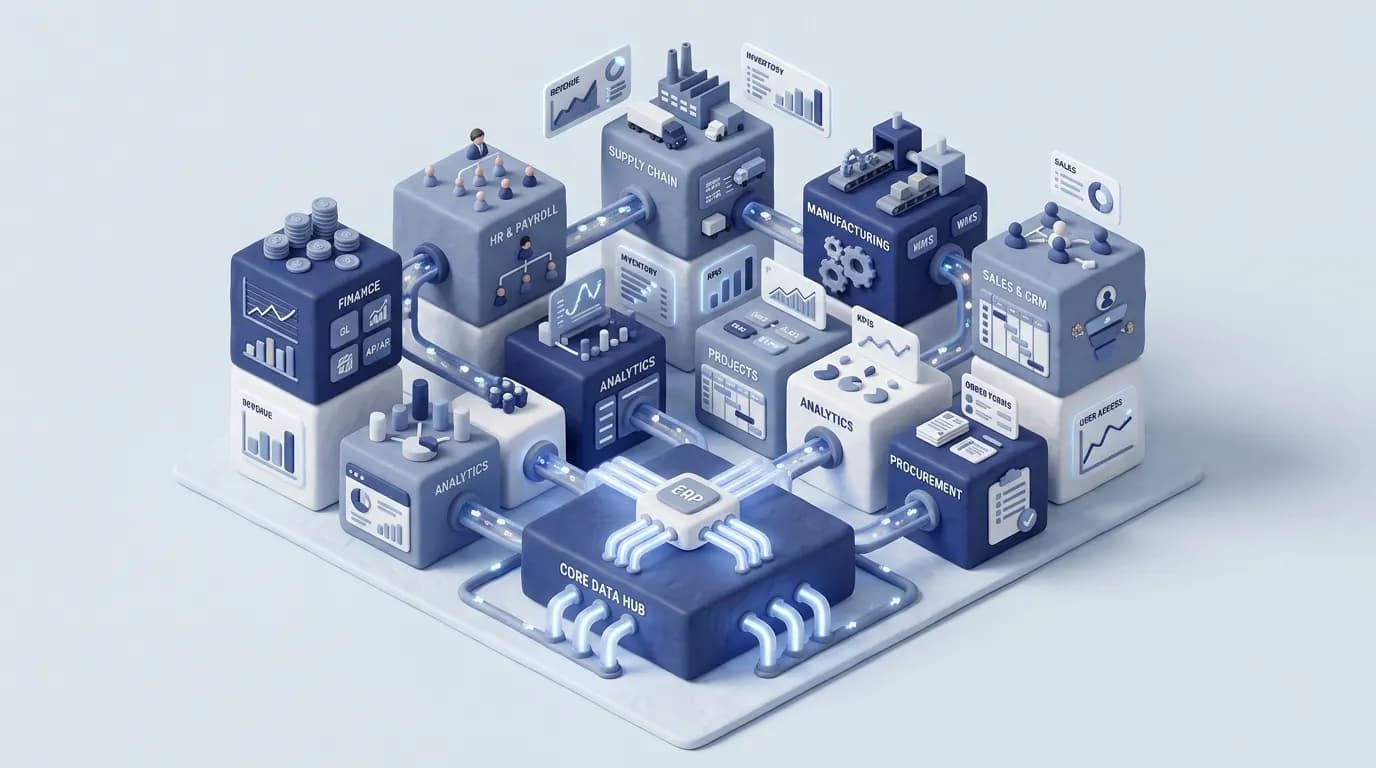
As mid-market enterprises cross $10M–$50M in revenue, the systems that enabled initial growth—often entry-level accounting tools, fragmented SaaS point solutions, and sprawling Excel workbooks—transform into severe growth inhibitors. Learn how to diagnose operational friction before it impairs customer fulfillment.
1. The Tipping Point: When Spreadsheets Turn Toxic
In early-stage operations, spreadsheets and standalone entry-level accounting tools are practical, agile, and cost-effective. However, as order volumes surge into tens of thousands of SKUs and transactional lines per month, these informal tools quickly turn into operational debt.
When multiple team members across inventory, procurement, and dispatch maintain separate versions of "the truth," data discrepancies inevitably snowball into delayed shipments, stockouts, and erroneous financial forecasts.
“When your team spends more time reconciling data between tools than serving customers, your ERP is no longer supporting growth—it is constraining it.”
- Multiple conflicting versions of inventory balances across channels
- Excessive reliance on tribal knowledge rather than codified system rules
- Financial audits requiring weeks of manual data stitching
2. The Hidden Cost of Fragmented Point Solutions
Many mid-market companies attempt to solve functional bottlenecks by tacking on disjointed point SaaS products—a third-party warehouse management app, an external CRM, a separate billing portal, and an ecommerce connector.
Each point integration introduces synchronization fragility, recurring API maintenance costs, and vendor lock-in. When one API schema updates unexpectedly, downstream operations grind to a halt.
3. Architectural Blueprint: Moving to a Unified Backend
Modern enterprises are consolidating their entire operating stack around unified, open-architecture ERP systems like Odoo Enterprise. By running CRM, Sales, Manufacturing, Inventory, and Accounting on a single PostgreSQL relational backend, every transaction updates the global ledger in real time.
This single source of truth empowers executive leadership with accurate margin analytics, instant stock availability, and automated financial close.
Strategic Key Takeaways
Executive Action Checklist
Ready to implement these architectures in your enterprise?
Our senior practice leads provide tailored technical roadmaps and guaranteed implementation delivery.
Samir Patel
Principal Enterprise Architect at Akshar Group Technologies. Specializing in enterprise architectural design, ERP migrations, and intelligent workflow automation.
Related Strategic Playbooks
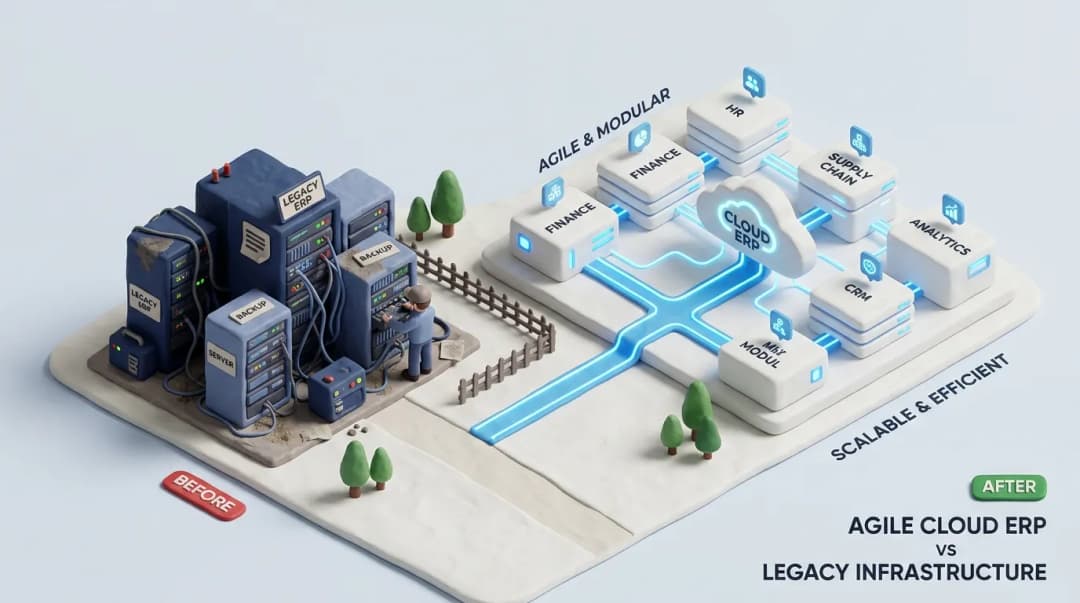
Odoo vs Legacy ERP: When Should You Make the Move?
Evaluating total cost of ownership, modular customizability, and operational agile workflows when migrating from legacy on-prem systems.
Odoo vs Custom Software: Which Approach Suits Your Business?
An objective decision framework comparing pre-built modular ERP architecture against bespoke software development for growing mid-market enterprises.
What's Holding Your Business Back?
Tell us where you want to go, what's getting in the way, and we'll help you figure out the technology to get there.